Mastering venture capital (VC) terms is a critical skill for startup founders preparing for business idea pitching and investor conversations. Whether you are building your first pitch deck or refining your fundraising strategy, understanding startup funding terminology helps you communicate clearly, negotiate confidently, and avoid costly mistakes.
For many founders, entering the world of venture capital can feel overwhelming. Investors often use complex financial language, legal clauses, and deal structures that are unfamiliar to first-time entrepreneurs. Without clarity on these concepts, even strong business ideas can struggle to secure funding.
In this comprehensive guide we covers 100+ essential venture capital terms every startup founder should know, explained in simple, practical language. Alongside core funding concepts, it helps founders understand how these terms apply to real investor discussions, pitch deck examples, and sample startup pitch decks. Whether you are pitching angel investors, venture capital firms, or family offices, this glossary is designed to make you investor-ready.
Fundraising Rounds and Structures
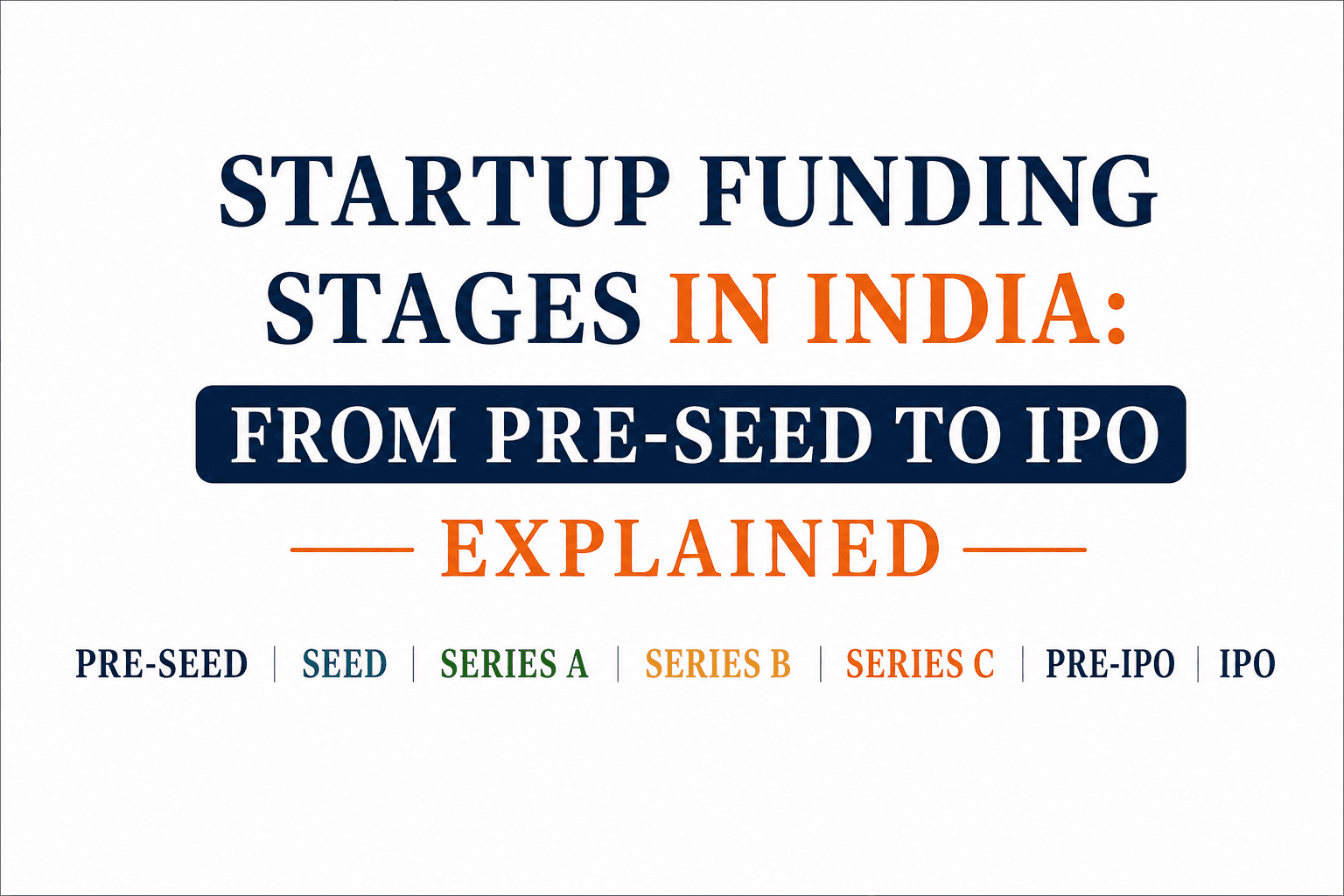
Pre-Seed: Earliest stage funding, usually from friends, family, or angels, used to validate ideas and build early prototypes.
Seed Round: Initial institutional funding round aimed at validating product-market fit and funding early traction and team building.
Series A: First major VC round focused on scaling the product, expanding the team, and building repeatable revenue.
Series B: Growth-stage funding used to expand market presence, operations, and revenue at a larger scale.
Series C and Later Rounds: Later-stage funding rounds used for aggressive expansion, acquisitions, or preparation for IPO.
Bridge Round: Short-term funding raised between major rounds to extend runway until the next financing closes.
Convertible Note: Debt instrument that converts into equity at a later funding round, typically with a valuation cap or discount.
SAFE (Simple Agreement for Future Equity): Founder-friendly agreement allowing investors to receive equity in the future without interest or maturity dates.
Priced Round: Equity funding round where company valuation is fixed and shares are issued immediately.
Down Round: A funding round raised at a lower valuation than the previous round, often reflecting business or market challenges.
Valuation and Ownership
Pre-Money Valuation: Company’s valuation before receiving new investment, used to calculate founder dilution.
Post-Money Valuation: Company’s valuation after new capital is added, including the latest investment.
Cap Table (Capitalization Table): Detailed table showing ownership percentages of founders, investors, and employees.
Equity Dilution: Reduction in ownership percentage when new shares are issued to investors.
Fully Diluted Shares: Total potential shares outstanding including options, warrants, and convertible securities.
Option Pool: Shares reserved for future employees and advisors to attract and retain talent.
409A Valuation: Independent valuation used to price employee stock options, mainly in US-based companies.
ESOP (Employee Stock Option Plan): Equity incentive plan granting employees ownership to align long-term interests.
Fair Market Value (FMV): Estimated price at which shares would change hands between willing buyers and sellers.
Liquidation Value: Estimated proceeds shareholders would receive if the company were liquidated.
Term Sheet Essentials
Term Sheet: Non-binding document outlining key commercial and legal terms of an investment.
Valuation Cap: Maximum valuation at which convertible instruments convert into equity.
Discount Rate: Percentage discount given to early investors when their investment converts into equity.
Anti-Dilution Clause: Provision protecting investors if shares are issued later at a lower valuation.
Pro-Rata Rights: Right allowing investors to maintain their ownership percentage in future funding rounds.
Drag-Along Rights: Provision enabling majority shareholders to force minority shareholders to sell during an acquisition.
Tag-Along Rights: Right allowing minority shareholders to sell shares alongside majority shareholders.
Right of First Refusal (ROFR): Investor’s right to buy shares before they are sold to external parties.
Voting Rights: Rights determining how shareholders vote on company decisions.
Protective Provisions: Special investor rights requiring consent for major company actions.
Investor Returns and Exits
Exit: Event allowing investors to realize returns, typically through IPO or acquisition.
Pre-IPO investments: involve buying shares of companies before they are listed on stock exchanges, offering early access to growth
IPO (Initial Public Offering): Company lists shares on a public stock exchange.
Mergers and Acquisitions (M&A): Sale or merger of a company with another entity.
Secondary Sale: Sale of existing shares by current shareholders to new investors.
Liquidity Preference: Defines payout order to investors before common shareholders at exit.
Liquidation Preference Multiple: Specifies how many times invested capital investors receive before others.
Participating Preferred: Preferred shares that receive both liquidation preference and participation in upside.
Non-Participating Preferred: Preferred shares that choose either liquidation preference or equity participation.
Internal Rate of Return (IRR): Annualized measure of investment performance over time.
Multiple on Invested Capital (MOIC): Total value returned divided by original investment amount.
Governance and Control
Board of Directors: Governing body responsible for strategic oversight and major decisions.
Board Observer: Non-voting participant attending board meetings for monitoring purposes.
Founder Vesting: Gradual earning of founder equity over time to ensure long-term commitment.
Cliff Period: Initial vesting period during which no equity vests.
Reverse Vesting: Founders forfeit unvested shares if they leave early.
Supermajority Vote: Higher approval threshold required for critical decisions.
Protective Covenants: Restrictions imposed to protect investor interests.
Control Rights: Investor rights influencing key business and financing decisions.
Information Rights: Investor access to financial statements and company updates.
Inspection Rights: Right to review company records and operations.
Deal Structures and Securities
Preferred Stock: Shares with special rights such as liquidation preference.
Common Stock: Standard shares typically held by founders and employees.
Warrants: Rights to purchase shares at a future date at a fixed price.
Options: Rights granted to employees to buy shares at a predetermined price.
Convertible Preferred Stock: Preferred shares that can convert into common stock.
Redemption Rights: Investor’s right to require company buyback of shares after a period.
Pay-to-Play: Provision requiring investors to participate in future rounds to retain rights.
Cumulative Dividends: Dividends that accumulate if unpaid.
Non-Cumulative Dividends: Dividends that do not accumulate if unpaid.
Investor Types and Ecosystem
Angel Investor: Individual investing personal funds in early-stage startups.
Venture Capitalist (VC): Institutional investor funding high-growth startups.
Family Office: Private wealth entity investing across startups and alternative assets.
Corporate VC (CVC): Venture arm of large corporations investing strategically.
Fund of Funds: Investment fund investing in other VC funds.
Micro-VC: Small VC funds focused on seed and early-stage investments.
Lead Investor: Investor setting deal terms and leading a funding round.
Syndicate: Group of investors pooling capital for a single investment.
Limited Partner (LP): Investor providing capital to a VC fund.
General Partner (GP): Manager responsible for fund operations and investment decisions.
Startup Metrics and KPIs
ARR (Annual Recurring Revenue): Predictable yearly revenue, common in subscription businesses.
MRR (Monthly Recurring Revenue)
Monthly recurring income used to track growth.
Gross Margin: Revenue remaining after direct costs.
EBITDA: Earnings metric used to assess operating profitability.
CAC (Customer Acquisition Cost): Cost to acquire one paying customer.
LTV (Customer Lifetime Value): Total revenue expected from a customer.
Burn Rate: Monthly cash expenditure.
Runway: Time before the company runs out of cash.
Churn Rate: Percentage of customers lost over time.
Growth Rate: Speed at which revenue or users increase.
Legal and Compliance
Due Diligence: Investor investigation of financial, legal, and operational details.
Closing Conditions: Requirements to be met before finalizing a deal.
Indemnification: Protection against future legal or financial claims.
Representations and Warranties: Legal assurances provided by founders.
No-Shop Clause: Restriction on seeking other offers during negotiations.
Exclusivity Period: Time during which company negotiates with one investor.
Confidential Information Memorandum (CIM): Detailed document prepared for investors.
Data Room: Secure digital repository for company documents.
KYC and AML: Identity verification and anti-money laundering compliance.
Side Letter: Additional agreement granting specific investor rights.
Exit and Market Term
Unicorn: Startup valued at over $1 billion.
Decacorn: Startup valued at over $10 billion.
Zebra: Startup focused on sustainable and profitable growth.
Acqui-hire: Acquisition primarily for team talent.
Trade Sale: Company sold to another business.
Strategic Investor: Investor offering industry expertise alongside capital.
Financial Investor: Investor focused primarily on financial returns.
Carried Interest: Profit share earned by fund managers.
Fund Vintage Year: Year in which a VC fund was launched.
Distribution Waterfall: Order in which proceeds are distributed at exit.
Note:
This guide is designed to help startup founders speak the language of venture capital with confidence, avoid common fundraising pitfalls, and pitch effectively using clear, investor-aligned terminology.