Venture Capital Secondaries Market India
Introduction
India's private capital markets are evolving rapidly. While stock market investors focus on listed companies, a growing number of High-Net-Worth Individuals (HNIs), family offices, and institutional investors are exploring opportunities in VC Secondaries India, Pre-IPO Stocks, Unlisted Shares, and Private Market Investments.
As startups remain private for longer and venture capital funds seek liquidity, the Venture Capital Secondary Market India has emerged as one of the most attractive investment segments. Investors now have access to established private companies before their IPOs, often at valuations that provide significant upside potential.
What Are VC Secondaries?
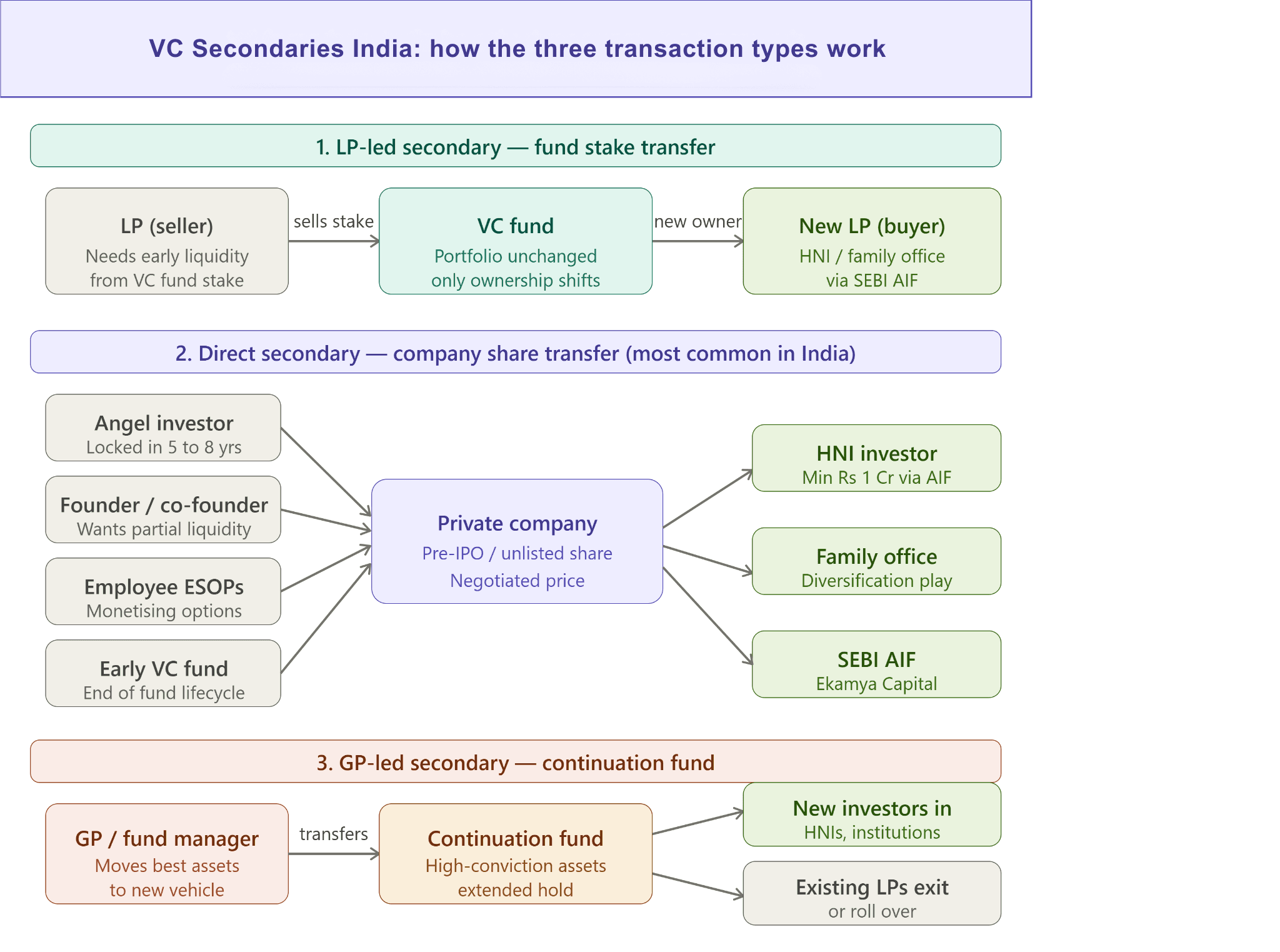
VC Secondaries, or Venture Capital Secondary Investments, involve purchasing existing ownership stakes in private companies or venture capital funds from current shareholders.
Unlike primary investments, where fresh capital is invested directly into a company, secondary investments allow investors to acquire shares from existing stakeholders such as:
Angel Investors
Venture Capital Funds
Startup Founders
Employees holding ESOPs
Family Offices
Institutional Investors
In simple terms, VC secondaries enable investors to participate in the growth of mature private companies without investing during their earliest and riskiest stages.
Investors looking for structured access to VC Secondaries India often explore opportunities through a SEBI-Registered Alternative Investment Fund that specializes in private market opportunities.
Why VC Secondaries Are Growing Rapidly in India
Delayed IPO Timelines
Many Indian startups are staying private longer than ever before. Instead of listing quickly, companies are raising multiple private funding rounds before considering an IPO.
This has created a growing demand for secondary liquidity among early investors.
Expansion of Alternative Investment Funds
India's Alternative Investment Fund ecosystem has grown substantially over the last decade. As more funds mature, secondary transactions are becoming a critical mechanism for liquidity and portfolio management.
Investors interested in private market opportunities can explore VC Secondaries and Alternative Investment Funds as part of a diversified investment strategy.
Rising HNI Participation
HNIs and family offices are increasingly allocating capital toward:
Private Equity
Venture Capital
Unlisted Shares
Pre-IPO Stocks
Alternative Investments
This growing investor demand continues to fuel the expansion of the secondary market
Types of VC Secondary Transactions
Direct Secondaries
Direct secondary transactions occur when investors purchase shares directly from existing shareholders.
Common sellers include:
Startup founders
Employees holding ESOPs
Angel investors
Early-stage venture capital funds
Many opportunities commonly known as Unlisted Shares India fall within this category. Contact for Buy/Sell unlisted share trade in India.
How to Invest in Unlisted Shares Through VC Secondaries
Investors can access private market opportunities through several routes.
Direct Share Purchases
Investors may purchase shares directly from existing shareholders in private companies.
Popular categories include:
Technology Startups
Fintech Companies
Consumer Brands
Manufacturing Businesses
IPO-Bound Companies
Investors seeking access to private companies can invest in unlisted shares in India through regulated channels and experienced intermediaries.
Through SEBI-Registered AIFs
Many investors prefer investing through professionally managed Alternative Investment Funds.
Advantages include:
Due diligence
Regulatory oversight
Diversification
Professional portfolio management
Explore curated Private Market Investment Opportunities through a SEBI-compliant investment structure.
Through Secondary Market Platforms
Several platforms facilitate transactions in:
Pre-IPO Stocks
Unlisted Shares
Startup Equity
Secondary Share Transfers
Investors should always evaluate the quality of due diligence and compliance processes before participating.
VC Secondaries vs Pre-IPO Stocks
Although the terms are often used interchangeably, they are not identical.
Feature | VC Secondaries | Pre-IPO Stocks |
Investment Scope | Fund stakes and company shares | Company shares only |
Investor Base | Institutional and HNI investors | HNI and retail investors |
Structure | Direct, LP-led, GP-led | Mostly direct transactions |
Diversification | Possible | Usually single-company exposure |
Many Pre-IPO investments are effectively direct secondary transactions.
Benefits of Investing in VC Secondaries India
Better Visibility
Investors gain exposure to companies that have:
Proven products
Revenue traction
Institutional backing
Established governance
Attractive Entry Valuations
Secondary buyers often enter at negotiated discounts compared to primary funding rounds.
Portfolio Diversification
VC secondaries provide access to:
Technology
SaaS
Fintech
Healthcare
Consumer Brands
Manufacturing
Exposure to Future Market Leaders
Many companies accessible through secondary transactions eventually become IPO candidates.
Risks Investors Should Understand
Illiquidity Risk
Private investments cannot be sold as easily as publicly traded stocks.
Valuation Risk
Private company valuations can fluctuate based on business performance and market sentiment.
Regulatory Risk
Investors should ensure compliance with:
SEBI regulations
Companies Act provisions
Shareholder agreements
Information Risk
Private companies disclose less information than listed companies, making due diligence critical.
How to Evaluate a VC Secondary Opportunity
Before investing, consider the following factors:
Business Fundamentals
Revenue Growth
Profitability
Cash Flow
Market Share
Management Quality
Assess the track record and credibility of founders and management teams.
Exit Visibility
Potential exits may include:
IPOs
Strategic acquisitions
Future secondary transactions
Pricing
Evaluate whether the proposed transaction price reflects the company's fundamentals and growth potential.
Note: Investments in VC secondaries, unlisted shares, pre-IPO stocks, and private market opportunities involve significant risks.it is advisable to consult an experienced portfolio manager, fund manager, investment advisor, or financial expert before making any investment decisions.
Need Help Evaluating a VC Secondary Opportunity?
Ekamya Capital, a SEBI-registered AIF in Gurugram, helps investors identify and evaluate quality private market opportunities. Our experienced investment team supports informed decision-making while ensuring investments align with your financial goals, risk profile, and investment horizon.
Contact - info@ekamya.com | +91 9810140864
Invest in VC Secondaries Through Ekamya Capital
As India's private market ecosystem continues to evolve, investors require trusted partners with expertise in sourcing, evaluating, and managing private market investments.
Ekamya Capital provides access to curated opportunities across:
VC Secondaries
PE Secondaries
Pre-IPO Stocks
Unlisted Shares
Private Equity Investments
Alternative Investment Funds
Our investment approach focuses on disciplined due diligence, regulatory compliance, and long-term value creation.
Resource:
To deepen your understanding of private markets, you may also explore: